


From SpursTalk.com
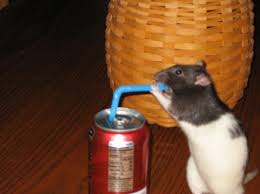
A man in South Dakota claims he found a mouse inside of his can of Coca-Cola last June. He had purchased the can from a gas station, according to the Mitchell Republic.
When Duane Putzier was nearly finished with his can of Coke when he allegedly felt something solid touch his lips from inside the can. He and his wife cut open the can to find a dead mouse. Putzier says the next day he became ill and was forced to miss about 60 hours of work and managed to rack up nearly $1,000 in medical bills.
Putzier is taking his case to the man and suing the large soda corporation for $2,026 in addition to financial compensation for any other damages that can be proven in trial.
Coca-Cola is unique in that it will take any case brought against them to trial. They have every strict quality assurance teams that handle these cases with great scrutiny. The company is denying these accusations from Putzier and their Attorney, Brian Johnson, is confident he can prove exactly why, and it’s a little gross.
According to Johnson, the proof can be seen in the mouse’s bodily state. Coca-Cola records show that the can in question was produced at a facility in Portland, Indiana on April 25, 2016, reported by the Grand Forks Herald. (This information is found by using tracking and serial numbers on the can.)
Johnson said in court last week that had a mouse managed to get inside of a Coca-Cola can, a couple things would have happened. First, the mouse would have been heavily decomposed (NOT disintegrate, like commonly thought,) by the time of discovery. The rodent Putzier is claiming to have found was nearly whole and well preserved.“It had fur. It had blood on its nose. Its limbs were intact. There was very minor decomposition,” stated Johnson.
Don’t believe that? Here was an experiment done using another soda, same active chemicals.
In addition to the lack of decomposition of the mouse, another thing doesn’t add up. The Coca-Cola attorney gave a little science lesson. The gases let off by a dead mouse mixing with the Coke ingredients would have compromised the cans physical appearance.
As part of the defense, a quality assurance representative and line supervisor from the Indiana plant will witness for Coca-Cola. In addition to their own employees testifying, Coca-Cola plans to have a veterinary pathologist attest to the mouse’s decomposition.
If you’re genuinely concerned about the Coca-Cola bottling process, here is everything the cans go through before consumption.