


When you’re communicating electronically in your professional life, there are a few rules that are just common sense. Have a professional email (HaloGuy4Eva@whatevs.com is NOT an example of this), use spell check and proper punctuation, and keep on topic. Just send a separate email with your Game of Thrones spoilers!

But something else that might not occur to you are the usage of emojis and emoticons. They’ve become so commonplace in text that it’s all but effortless to tack a smiley on the end of a sentence or to emphasize orders received with a thumbs up. But according to a new study, the people getting these responses might think you’re clueless!
It’s all about first impressions, according to a study published in “Social Psychological and Personality Science.” The study revealed that while the use of a smiley or similar textual emotes in the beginning of conversations might increase the positive reception of a message, it overall is outweighed by the recipient’s lack of confidence in the sender’s competence. The study goes on to show that not only will the recipient have a low opinion upon receiving an email with emojis, but they’ll also be less willing to share information with the sender as well.

I’m sorry, but between ending every email with “B)” and your man bun, we have to let you go.
Using three different experiments with 549 participants from 29 different countries, these results are reflected across the board regardless of region or language: the people getting messages containing emojis have less confidence in the sender’s ability to do their job. It’s understandable if you’ve thought otherwise though, this does goes against other studies showing that smiling face-to-face makes interactions way more positive.
But the results are pretty clear: If you’re sending formal email, leave out emoticons and emojis. And when in doubt, remember how very very terrible The Emjoi Movie was.
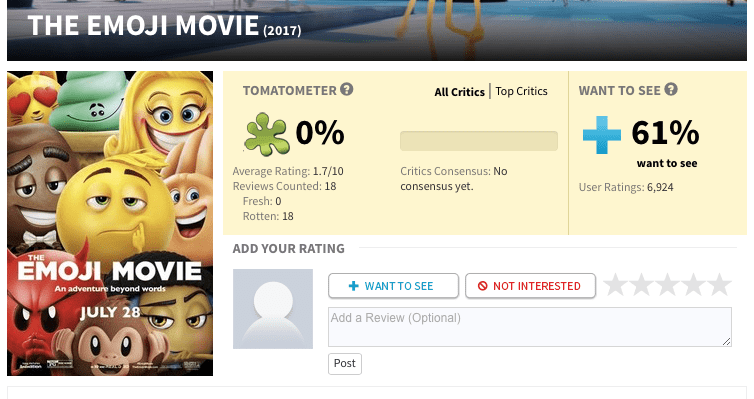
Seriously…it’s SO BAD.